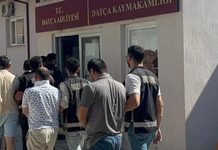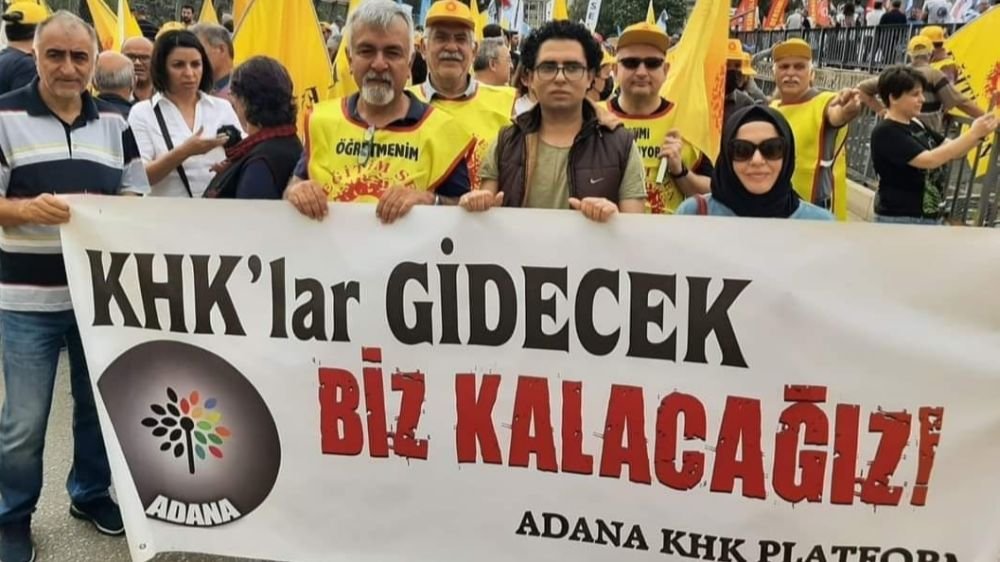
Turkish authorities reversed the dismissal of at least 15 civil servants only after they had died, years after they were removed from their jobs during the crackdown that followed a failed military coup in 2016, the Velev news website reported.
The Confederation of Public Employees Trade Unions (KESK) documented the posthumous decisions in a report on violations of public-sector union rights. The decisions came months or years after the workers’ deaths, leaving them without their salaries and public-service benefits during their final years and preventing them from returning to their jobs. Labor groups say the cases show that a review system intended to remedy wrongful dismissals often moved too slowly to provide meaningful relief.
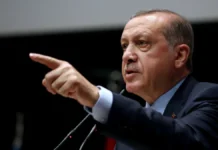
Turkey experienced a controversial military coup attempt on the night of July 15, 2016, which, according to many, was a false flag operation aimed at entrenching the authoritarian rule of President Recep Tayyip Erdoğan by rooting out dissidents and eliminating powerful actors such as the military in his desire for absolute power.
Following the coup attempt, the Turkish government declared a state of emergency (OHAL) that remained in effect until July 19, 2018. During this period, the government carried out a purge of state institutions under the pretext of an anti-coup fight by issuing a number of government decrees, known as KHKs. Over 130,000 public servants, including 4,156 judges and prosecutors, as well as more than 24,000 members of the armed forces were summarily removed from their jobs for alleged membership in or relationships with “terrorist organizations” by emergency decree-laws subject to neither judicial nor parliamentary scrutiny.
The Turkish government blamed the attempted takeover on the faith-based Gülen movement.
President Erdoğan has targeted followers of the Gülen movement, inspired by the late Muslim cleric Fethullah Gülen, since corruption investigations in December 2013 implicated him as well as some members of his family and inner circle. He dismissed the probes as a Gülenist conspiracy and designated the movement as a terrorist organization in May 2016, intensifying a sweeping crackdown after the coup attempt in July of the same year that he accused Gülen of orchestrating. The movement denies involvement in the coup attempt or any terrorist activity.
A special commission established to review dismissals, institutional closures and other measures imposed under emergency rule received 127,292 applications. It approved 17,960 and rejected 109,332 before completing its work in January 2023, meaning nearly 86 percent of the applications were unsuccessful.
Among those whose dismissal was reversed after death was Bülent Uçar, a hospital worker and former local leader of the Health and Social Service Workers Union in the eastern province of Malatya.
Uçar was dismissed under an emergency decree issued October 29, 2016. He died of a heart attack less than four months later, on February 18, 2017.
The review commission approved his appeal more than two years after his death. It found no information or documentation linking him to terrorist organizations or groups considered a threat to national security.
Uçar’s brother, Vedat Uçar, said the dismissal put his brother under intense psychological and financial pressure. He said Uçar became increasingly withdrawn and rarely left home after losing his job.
Several other civil servants also died before receiving decisions in their cases.
Ahmet Çoban, a dismissed public-sector employee and former local union leader, had his dismissal reversed about 10 months after his death. Necdet Kalkan, also a dismissed civil servant and union member, received a reinstatement decision about seven months after he died.
Public employee Mücahit Karataş, who had been undergoing cancer treatment, and computer technician Ömer Faruk Arsoy also died before the commission approved their appeals.
The report also described dismissed workers who died while trying to support themselves in jobs outside their professions.
Aslan Duman, a teacher and member of an education workers union, was killed on April 14, 2019, when a two-story building collapsed at a construction site where he had found work after his dismissal. His case was cited as an example of the economic consequences faced by dismissed employees rather than as one of the posthumous reversal decisions.
Former civil servants were not only fired from their jobs but also banned from working again in the public sector and getting a passport to seek employment abroad. The government also made it difficult for them to work formally in the private sector. Notes were put on the social security database about dismissed public servants to deter potential employers.
As a result, many purge victims have had to work in uninsured jobs with very little workplace safety. There have also been several cases where former public servants have died due to occupational accidents in physically demanding jobs.
KESK argues that many of its members were removed because of their union activity or criticism of the government rather than evidence connecting them to the coup attempt or a terrorist organization.