Turkey has put 784 companies under state trusteeship over alleged links to the faith-based Gülen movement, with the businesses reporting combined assets of TL 42.3 billion when authorities took control of them, according to government figures published by the state-run Anadolu news agency on Monday.
The figures, obtained by Anadolu from the Treasury and Finance Ministry, provide a cumulative account of financial measures imposed during a crackdown that began before a failed coup in 2016 and expanded after it.
The total does not represent new seizures. The government had disclosed the same figures for the number of companies and their combined assets in October 2024. The latest account updates other data through the end of 2025.
The TL 42.3 billion figure is also not an estimate of what the companies are worth today. It combines the balance sheet assets they reported when they were taken over, on dates spanning several years.
That distinction matters because the Turkish lira has lost most of its value and Turkey has experienced years of high inflation since many of the seizures took place. The lira traded at about TL 2.95 to the dollar in August 2016, compared with about TL 47 on Tuesday, a loss of nearly 94 percent against the US currency.
Official annual inflation reached 85.51 percent in October 2022 and 75.45 percent in May 2024. It has remained above 30 percent since December 2021 and stood at 32.11 percent in June 2026. The TL 42.3 billion historical total therefore understates the scale of the assets in current lira terms, while converting it at today’s exchange rate would also give a misleading estimate of their value at the time of seizure.
The ministry figures show that authorities froze assets belonging to 747 people in Turkey and asked foreign governments to freeze assets linked to 251 others.
The measures covered TL 6.11 billion, $2.5 million, €287,061 and 106.77 grams of gold. They also included 875 properties, 67 vehicles, one yacht and 135 commercial registry records. The government figures do not make clear whether the estimated values of those properties and vehicles were included in the TL 6.11 billion total.
Turkey’s Financial Crimes Investigation Board (MASAK) completed 84,724 analysis files related to alleged Gülen links by the end of 2025. Reports concerning 329,504 individuals and legal entities were submitted to judicial authorities.
MASAK shared intelligence concerning 6,520 individuals and legal entities with institutions in Turkey and abroad during 2025. By the end of the year it had sent requests concerning 583 people and entities to foreign financial intelligence units.
The agency also suspended 2,137 transactions for seven working days based on suspicions that the assets involved were connected to money laundering or terrorism financing.
The government figures repeat the number of institutions closed in the first wave of emergency measures after the coup attempt: 35 healthcare institutions, 934 schools, 109 student dormitories, 104 foundations, 1,125 associations, 15 universities and 19 labor unions.
Erdoğan’s campaign against the Gülen movement, a worldwide civic initiative inspired by the ideas of the late Islamic scholar Fethullah Gülen, began after corruption investigations in December 2013 implicated Erdoğan as well as members of his family and inner circle. Erdoğan dismissed the probes as a conspiracy and formally designated the movement as a terrorist organization in May 2016.
Following the July 15, 2016, coup attempt, which he immediately accused the Gülen movement of orchestrating, Erdoğan significantly expanded an already underway crackdown on the movement’s supporters. The movement strongly denies involvement in the coup attempt or any terrorist activity.
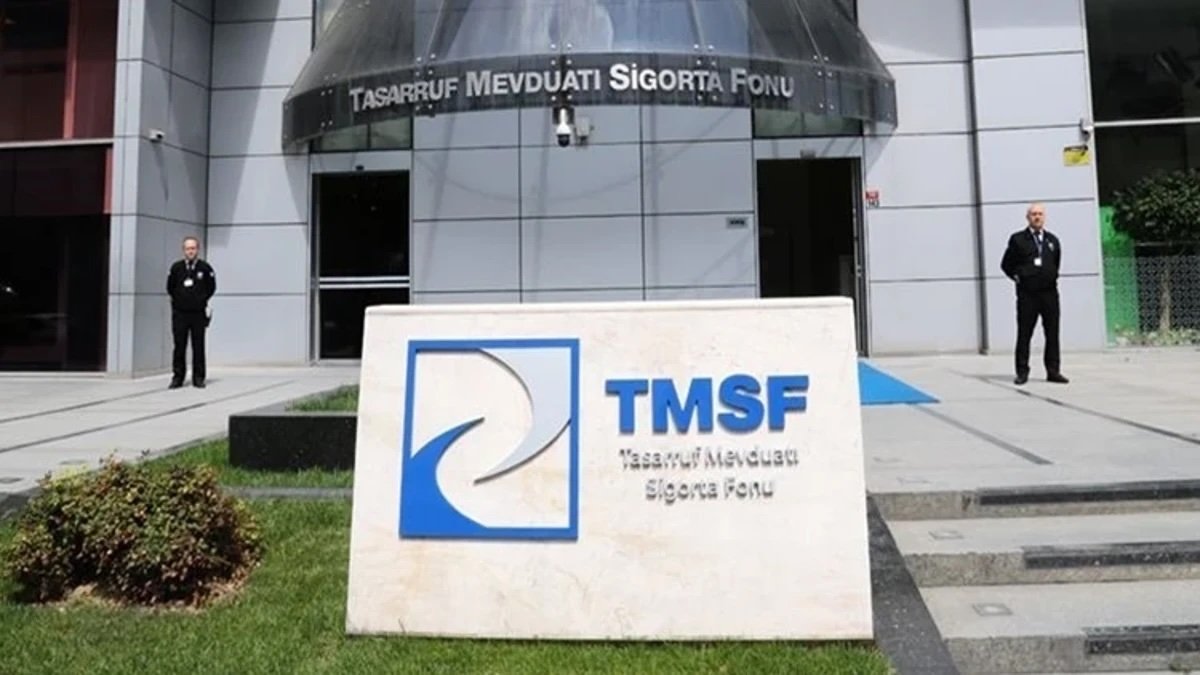
Courts put some businesses under trusteeship before the coup attempt. Bank Asya was transferred to the Savings Deposit Insurance Fund (TMSF) in May 2015, and trustees were appointed to Koza İpek Holding in October of that year.
Emergency decrees adopted after the coup expanded the system and transferred the management of companies under trusteeship to TMSF.
Bank Asya lost its banking license in July 2016 and is now listed by TMSF as bankrupt.
Koza İpek’s companies were transferred from TMSF to the Treasury and then to the Turkey Wealth Fund in August 2024. Koza İpek Holding was renamed Türk Altın Holding in February 2025.
Boydak Holding, renamed Erciyes Anadolu Holding in 2019, remains under TMSF management.
The TMSF’s role has since extended beyond the crackdown on the Gülen movement. The fund controlled 1,056 confiscated businesses by October 2025, up from 675 a year earlier, following company takeovers in money laundering, fraud, smuggling and other investigations.
The expansion turned the TMSF into one of Turkey’s largest business groups and raised concerns among business leaders, economists and rights advocates about property rights and the selective use of criminal investigations. More than 600 companies seized after the coup were eventually returned to their owners, while others were sold or liquidated.
This article is republished from Turkish Minute.